Ingredients
- 1.5 lbs of ground beef, 80/20
- 1 lb of ground veal1
- 1 lb of ground pork
- a good olive oil
- 4-5 flat fillet anchovies, canned in just olive oil
- a cup of a cheap white wine that you’d be willing to drink (I like DAOU Sauvignon Blanc)
- 1 tbsp of miso paste
- 2 tbsp of tomato paste
- 500 g of mirepoix (250 g of onion, 125g of carrot, 125g celery). The exact amount doesn’t matter as long as its close to 2:1:1.
- a couple cloves of garlic, diced or crushed or whatever
- 1 can of good peeled whole tomatoes, Dinapoli, San Marzano, etc. 28 oz
- chicken stock
- 1 bunch of thyme
- 2-3 bay leaves (depends on freshness)
- 1 Parmesan rind
Instructions
- Brown the meat using olive oil in a large, flat bottomed pan over medium high heat 2
- Add more olive oil, lower the temp slightly (medium ish), and cook the garlic3 and the sardines until the anchovies start falling apart, maybe 30 seconds to a minute.
- Add the mirepoix, and cook until the onions are translucent, add some salt to help pull moisture out of the onions, and use that moisture to scrape the fond (brown bits) off the bottom of the pan
- Add the white wine, and let it cook off, make sure the bottom of the pan is clean (no burnt bits!)
- Throw in the miso paste and tomato paste, stir to combine, let it cook a little longer
- Add the tomatoes. Make sure they are crushed beforehand4
- Pour in enough chicken stock to cover everything, and wait for it to come to a boil
- Add the meat back into the pan, and add more chicken stock if necessary.
- Add thyme sprigs, bay leaves, and Parmesan rind, bring to a gentle simmer.
- Place in an oven 275-300 degrees F, for about 3 hours, stirring it every 45 minutes.5
- Once everything starts tasting reasonable, take out the rind, the (likely leafless) thyme sprigs, and bay leaves. This is also an opportunity to spoon off any fat you see if you’re like that.
- let it cool for a little bit, or don’t, and blend everything together with an immersion blender. You can’t make it too smooth.
- Once it’s all blended, get it back on heat and up to a nice simmer. Add the cream and cook on a low simmer for 10 minutes or so.
- Your bolognese is ready. Dip some bread if you have a good baguette, or better yet eat with some pasta
- If you go with pasta, I recommend the reserved water method: boil good, starchy pasta in salty water. Remove from heat a minute or so before al dente. keep about 1/4 cup of that starchy water and drain the rest. Put the pasta, the water, and some bolognese back in the pan you cooked the pasta in, and cook over medium-high heat. Remove when it is slightly more watery than the consistency you want. Transfer to your eating receptacle of choice, top with more sauce, and some Parmesan cheese.6
Footnotes
- Ground veal can be hard to come by- feel free to sub with more pork or beef ↩︎
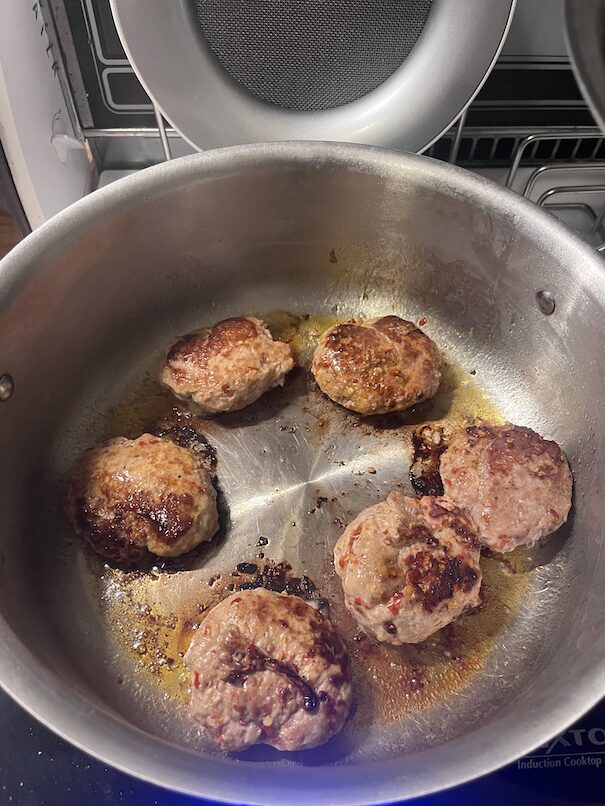
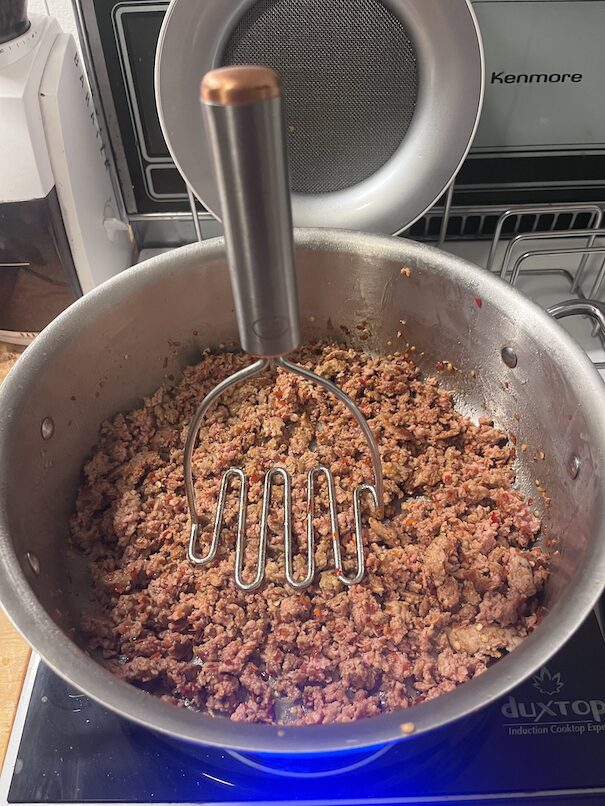
- There is a correct way to do this: form the meat into patties, pat dry, season, and cook as you would a cut of meat. the goal is to build a crust on both the meat and the pan without burning- we want to promote Maillard Reactions without making charcoal. Do not break apart just yet- pull them off as though you were making hamburgers, partially cooked, and save to add later. If you’ve mised your en places it won’t be out long enough to be a health problem. Here’s a photo of a similar process I did with ground pork for a sauce- note the char on the patties thats a good thing! You can also optionally break everything apart with a masher.
↩︎ - take care not to burn the garlic or that horrible bitter taste will haunt you for the rest of your days (and the dish as well). You can always wait to add the garlic until after the onions have been sweated. ↩︎
- don’t blend tomatoes, it just breaks everything apart too quickly- we want the heat to do that. Pour off the liquid from the can and then put the remaining tomatoes into a separate bowl. Break them up with your hands (be careful or it will make a mess) Side note: add a tablespoon of olive oil, some salt, some pepper and you have a great pizza sauce. ↩︎
- The goal of the oven cook is to do more caramelization than is possible on a stovetop. The reason is there is heat from above- since fat is lighter than water it floats to the top, where it would normally cool if it were on a stove top since it’s no longer in direct heat. The oven will continue to raise the temperature of this fat above boiling, where Maillard (our fav dude) works. Anything in that top layer will get slowly caramelized by this fat. We want this flavor, but check in periodically (every 45 minutes) or it will burn. Give everything a stir during these checkins, and scrape what you can off the sides of the pan- that quasi burnt gunk is the good stuff. You can also modulate the temperature of the dish by how you place the cover on the pan. Fully covered, the pan will enter a roiling boil, which is bad. Not covered at all is probably fine, but if you had chunks of meat the temp of the liquid might not hit 165, since it has so much spare surface area to which it can throw heat through evaporation. 3/4 to 1/2 covered is a nice sweet spot since it 1) brings up the temp, 2) keeps things below a boil. YMMV, err on the side of less chance of boiling. ↩︎
- This works for 2 people max as far as i can tell. I have yet to make it work with more than 200g of pasta at a time. ↩︎